This website uses cookies to analyze user experience and ads effectiveness. We use Google Analytics and Yandex.Metrica to collect anonymous information only if you allow us to do so by clicking "I understand" button.
Strontium
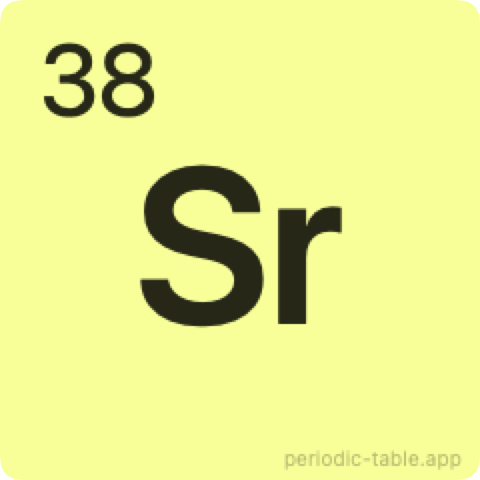
Strontium is a soft, silvery alkaline earth metal with chemistry similar to calcium. It reacts readily with air and water, so it occurs naturally in compounds rather than as a free metal. Its main minerals are celestine, a strontium sulfate, and strontianite, a strontium carbonate. Celestine supplies most mined strontium and is commonly processed into strontium carbonate for industrial use. To obtain the metal, producers use aluminum to remove oxygen from strontium oxide, then separate the strontium by distillation. Strontium salts give fireworks their brilliant red color, while strontium carbonate is also used to make permanent ceramic magnets. The element's name comes from Strontian, a Scottish village near which its mineral was discovered.
Atomic number
38
Group
IIA
Period
5
Mass
87.62
Latin name
Strontium
Electron configuration
[] 5s²
Oxidation state
0, 1, 2
Download Chemistry application to view more information about the chemical element